
A grill and a griddle are both popular cooking tools, but they serve distinct purposes. A grill features open grates that allow heat and smoke to circulate, creating sear marks and a smoky flavor. A griddle, on the other hand, is a flat, smooth surface used mainly for even cooking of items like pancakes or stir-fries.
Understanding these tools matters because each affects the texture, flavor, and cooking style of your food. Grills offer char and ventilation, ideal for meats and vegetables requiring direct heat and smoky aroma. Griddles provide consistent heat across the entire cooking surface, perfect for delicate or evenly cooked foods that might fall through grill grates.
This article will cover their key differences in design, heat distribution, cooking results, cleaning methods, and typical uses, helping you decide which one fits your cooking preferences and kitchen setup.
Design and Construction Differences Between Grill and Griddle
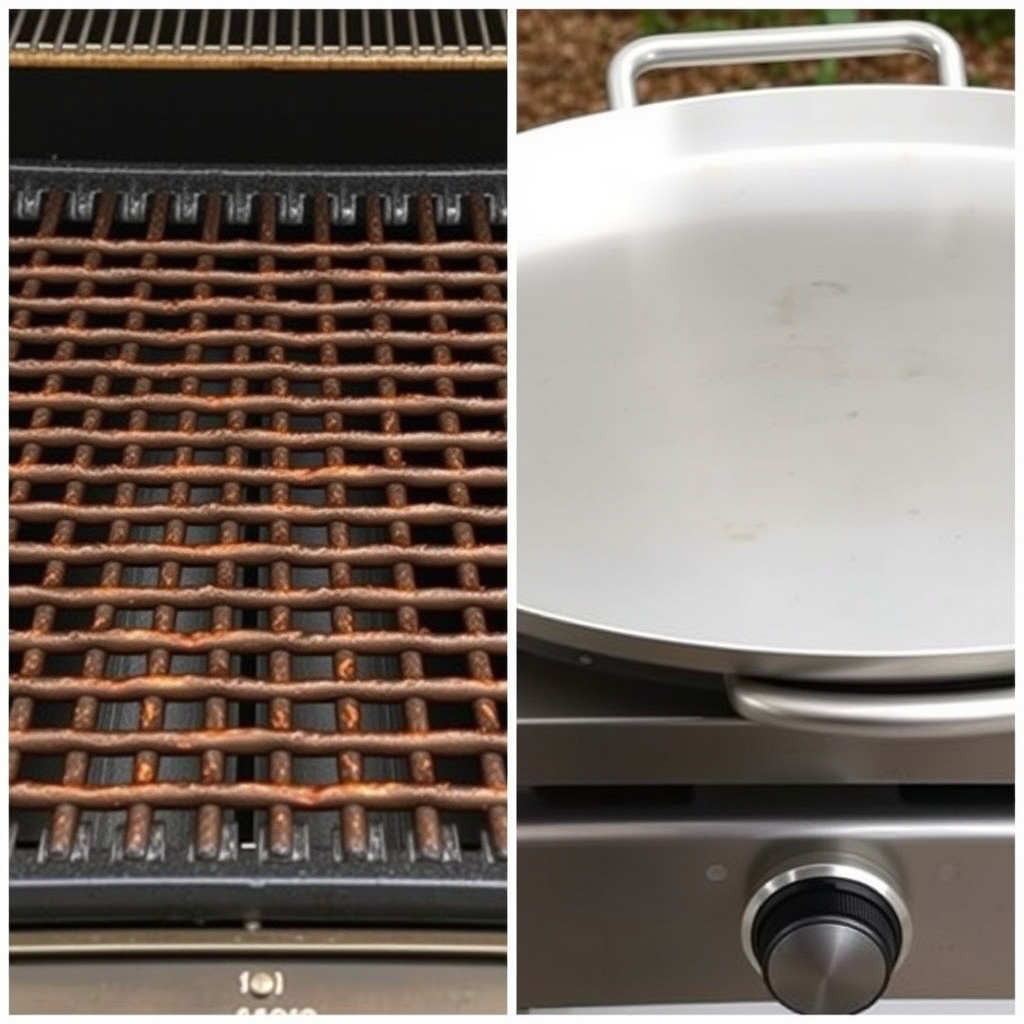
Physical Structure of a Grill
Grills consist of raised grates made from cast iron, stainless steel, or porcelain-coated metal. These grates sit above a heat source such as charcoal, gas burners, or electric coils, allowing heat and smoke to reach the food directly. The open design allows fat and juices to drip away, reducing flare-ups and creating distinctive grill marks.
This construction lets air circulate freely, contributing to the searing and smoky effects coveted in outdoor and indoor grilling. Grills commonly feature adjustable grates or multiple burners for temperature control across different zones.
Physical Structure of a Griddle
Griddles have a solid, flat cooking surface often made of cast iron, stainless steel, or aluminum. This continuous surface ensures direct and consistent contact between the food and the heat source, which sits below the plate. The solid top prevents juices from dripping away, retaining moisture in the food.
Many griddles are reversible or have a smooth non-stick side, optimizing them for a wide range of food types. Their design is suited for precise temperature control and uniform heat distribution, which is essential for foods sensitive to sticking or uneven cooking.
Heat Distribution and Cooking Performance
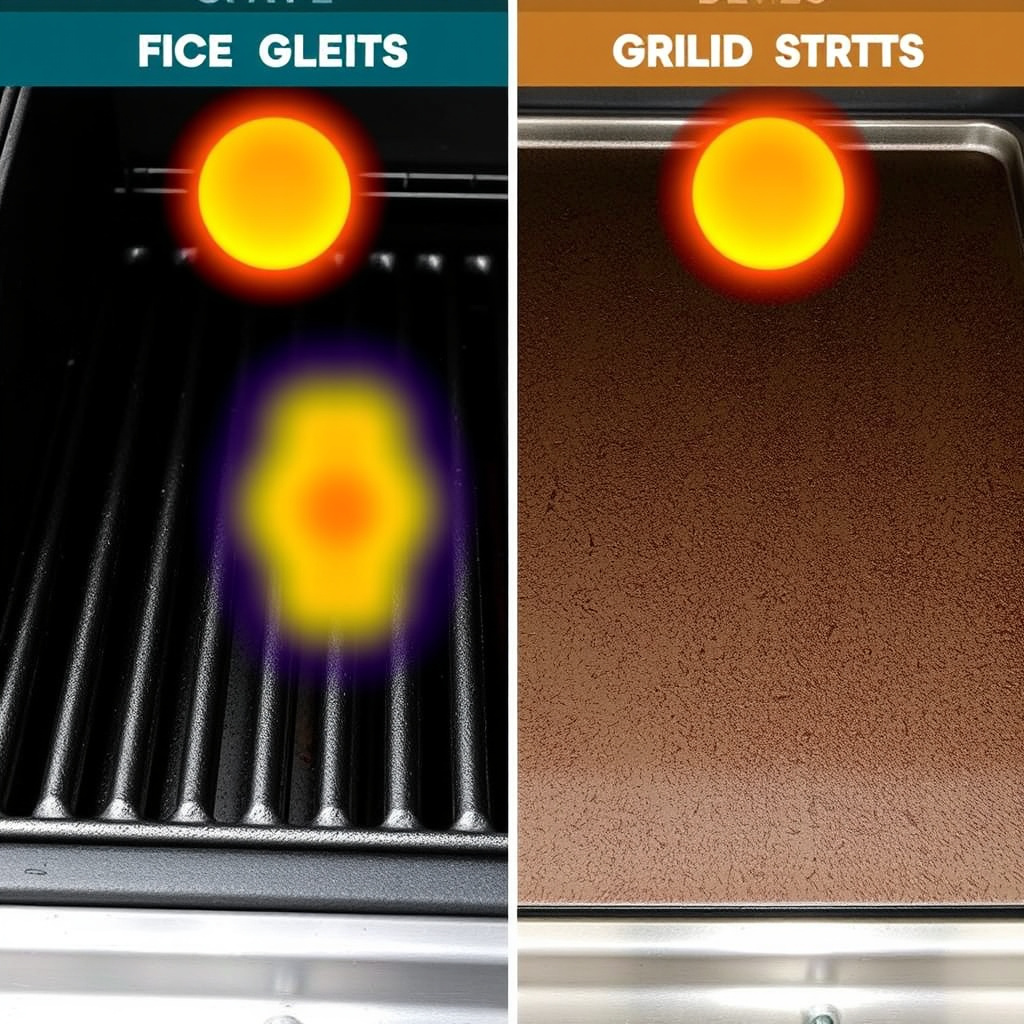
How Grills Distribute Heat
Grills provide direct radiant heat from the heat source beneath the grates, producing hot spots and cooler zones. These variations enable techniques like searing and slow cooking simultaneously. The open grates promote airflow that helps apply smoky flavor and crisp texture to grilled foods.
The exposure to flames or hot coals causes fats to drip and ignite briefly, creating characteristic grill flare-ups that add complex flavors but require attentive cooking to avoid burning.
- Direct radiant heat
- Hot and cool zones
- Flare-ups from dripping fat
Heat Distribution on Griddles
Griddles excel at distributing heat evenly across their flat surface. This consistency makes it easy to cook multiple items uniformly without hot spots, especially when preheated properly. The solid surface traps juices and moisture, resulting in tender, evenly cooked food.
Temperatures on a griddle are more stable and controllable than on a grill, which is why griddles are often used for pancakes, eggs, and stir-fries that require even cooking without burning.
- Even heat distribution
- Stable temperature
- Retains moisture in food
Typical Cooking Applications
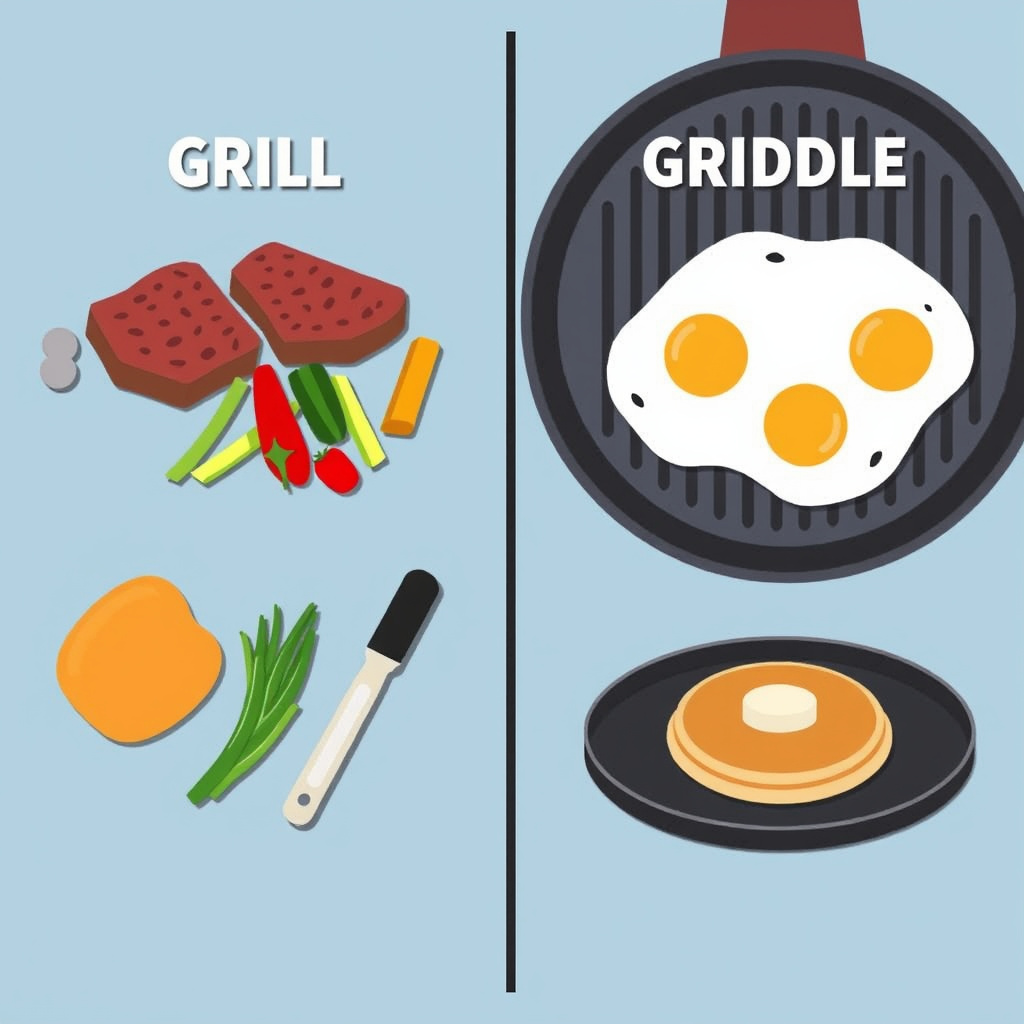
Best Foods for Grilling
Grills are ideal for cooking foods that benefit from high heat searing and smoke, such as steaks, burgers, chicken, seafood, and vegetables. The open grates create appealing grill marks and a charred exterior while letting excess fat drip away.
Outdoor grilling in particular enhances flavor through smoke developed by charcoal or wood chips. Items that need a crisp exterior and smoky flavor without steaming are best suited for the grill.
- Steaks and burgers
- Chicken and seafood
- Vegetables with char
For more on this, see our related guide: What Is a Flat Top Grill? Understanding Its Uses and Benefits.
Best Foods for Griddling
Griddles work well for breakfast foods like pancakes, bacon, and eggs due to their smooth, non-stick surface and precise temperature control. They also suit stir-fried vegetables, grilled cheese sandwiches, and quesadillas, where even browning is important.
The ability to cook many items at once and avoid direct flame contact makes griddles popular for indoor kitchens, diners, and anyone seeking controlled, mess-free cooking.
- Pancakes and eggs
- Stir-fries
- Sandwiches and quesadillas
Cleaning and Maintenance Considerations
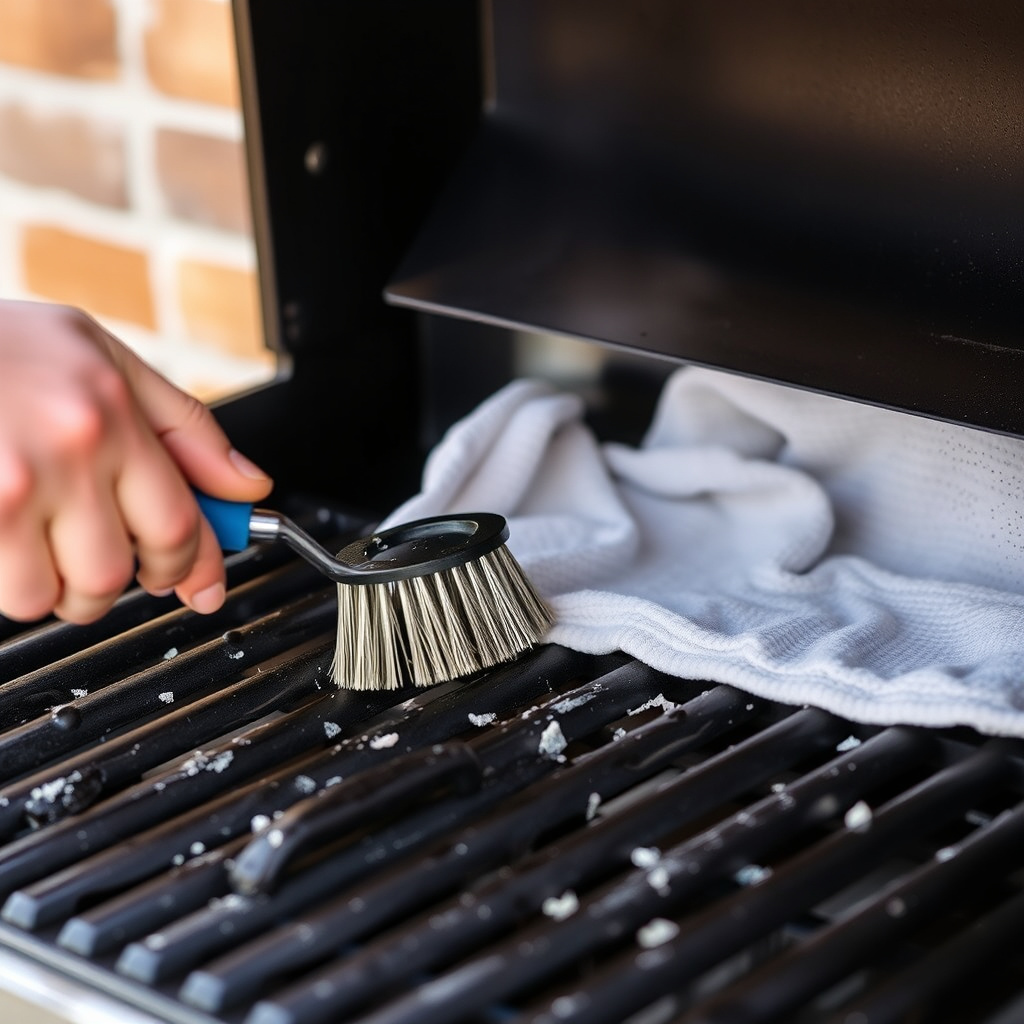
Cleaning a Grill
Grill cleaning involves scraping or brushing the metal grates to remove food residue and grease. Some grills feature removable grates for soaking or dishwasher cleaning, but the open design usually requires more frequent maintenance.
Depending on fuel type, ash removal is necessary for charcoal grills, while gas grills need inspection of burners and gas lines. Rust prevention via seasoning or covers extends grill life.
- Scrub grates after use
- Remove ash for charcoal grills
- Check burners regularly
Cleaning a Griddle
Griddles require wiping and sometimes scraping away stuck-on food, often with a soft scraper and warm soapy water. Many non-stick griddles are dishwasher safe or wipe-clean, simplifying maintenance.
Cast iron griddles benefit from seasoning to maintain the surface and prevent rust. Regular cleaning maintains even heat and prolongs the cooking surface life.
- Use soft scraper
- Season cast iron surfaces
- Avoid abrasive cleaners
Outdoor vs. Indoor Use for Grills and Griddles
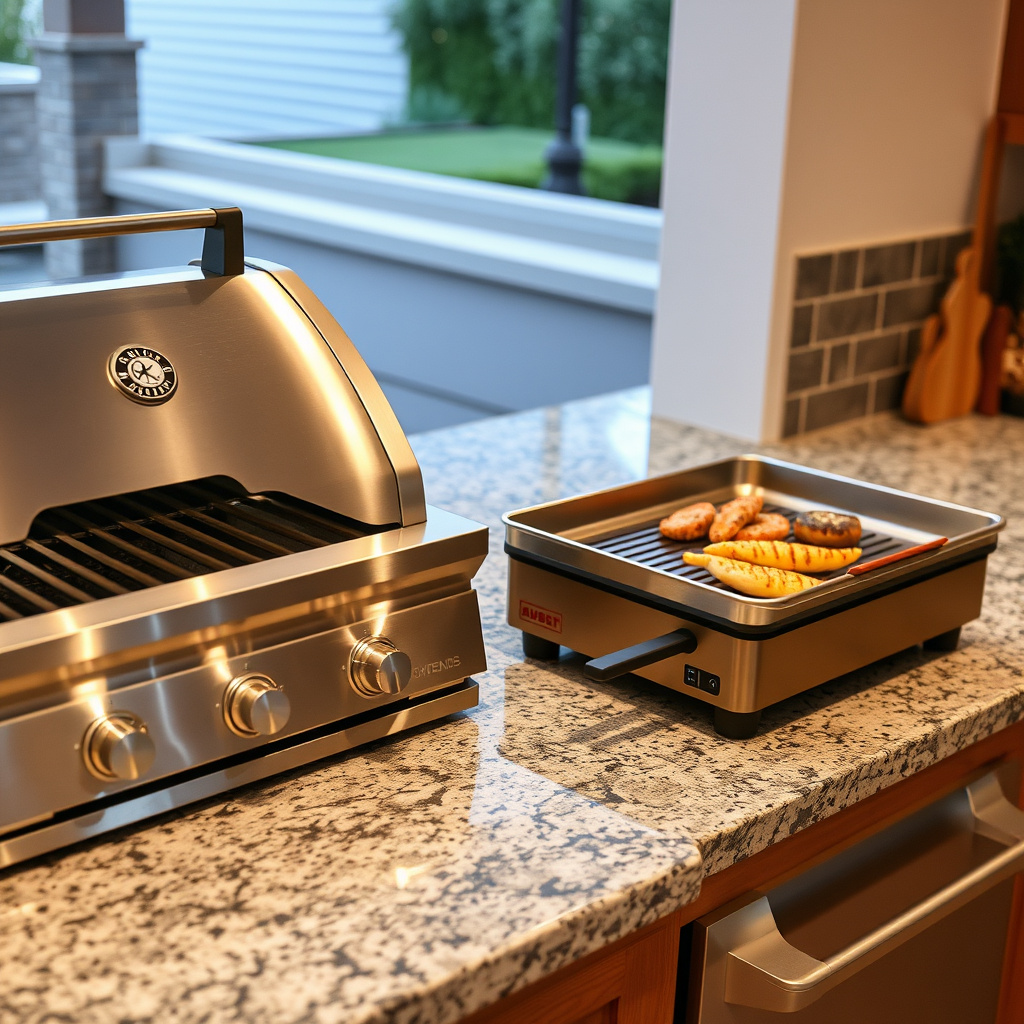
Grills for Outdoor Cooking
Grills are traditionally designed for outdoor use, taking advantage of open space and ventilation. Propane, charcoal, or wood-burning grills offer authentic flavor results but require proper setup and ventilation safety.
Their size and fuel requirements often make them impractical for indoor environments, although electric grills with lid covers can serve some indoor grilling needs.
- Propane, charcoal, or wood fuel
- Requires outdoor ventilation
- Large cooking areas
For more on this, see our related guide: What Is Two Zone Grilling? A Complete Guide for Better BBQ Control.
Griddles for Indoor Kitchens
Griddles are popular for indoor cooking because of their manageable size, clean operation, and ease of use. Electric griddles plug into standard outlets, making them convenient for everyday meals.
They provide a smoke-free, efficient option for cooking many foods and are common in diners, restaurants, and home kitchens alike.
- Electric or stovetop models
- Compact for kitchen counters
- Smoke-free cooking
Safety Tips for Using Grills and Griddles
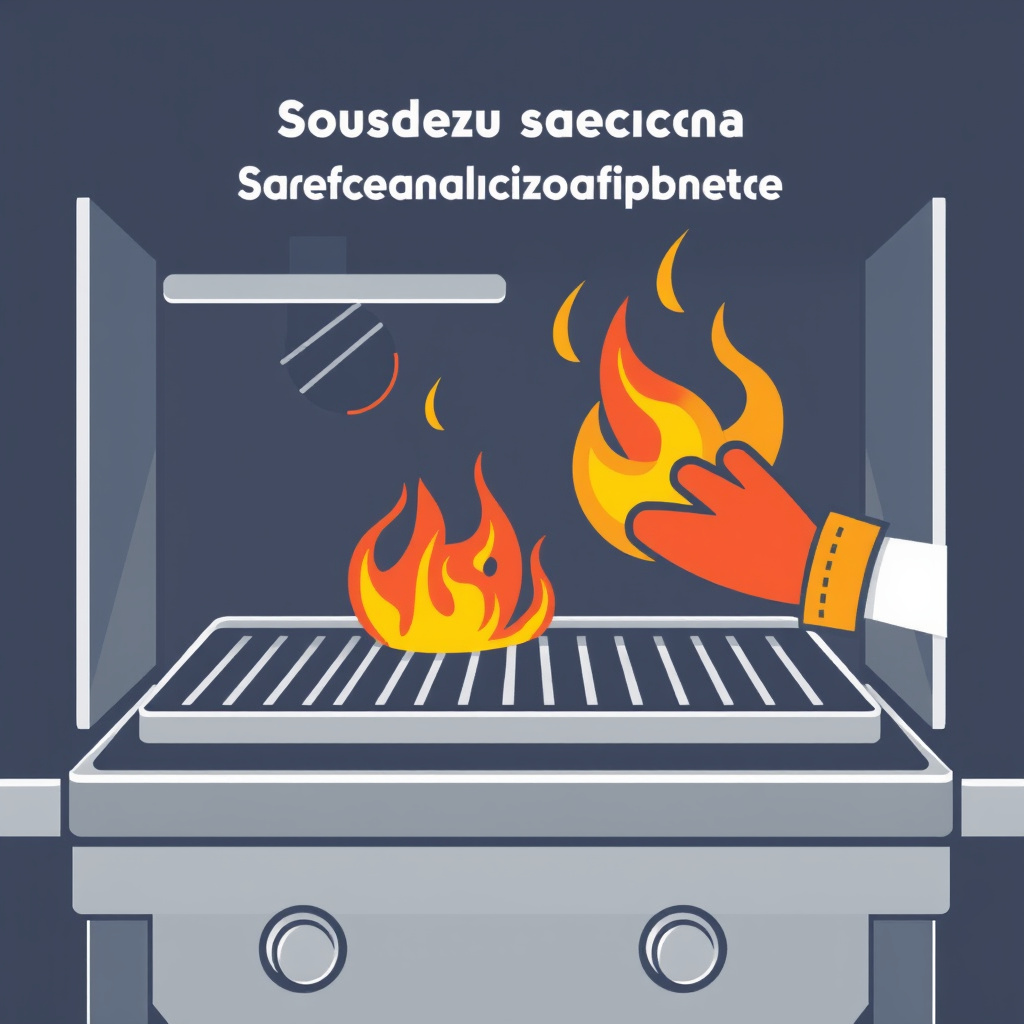
Safety While Grilling
When grilling, always place the grill in a well-ventilated outdoor area away from flammable objects. Use long-handled tools and heat-resistant gloves to avoid burns from flames and hot surfaces.
Keep a fire extinguisher nearby and never leave the grill unattended, especially when cooking with charcoal or wood that produces open flames.
- Use outdoors with ventilation
- Wear heat-resistant gloves
- Keep fire extinguisher close
For an overview of grilling and griddling methods, you can read more about the difference between grills and griddles. difference between grills and griddles.
Safety While Using Griddles
Griddles should be placed on stable, heat-resistant surfaces indoors. Avoid touching hot plates directly, and unplug or turn off immediately after use. Clean spills promptly to prevent slips and maintain hygiene.
Ensure cords are away from water and hot areas to prevent electrical hazards, especially for electric griddles.
- Keep on stable surface
- Handle hot surfaces cautiously
- Avoid water contact with cords
Grill vs. Griddle Category Comparison
Here's a straightforward comparison of grills and griddles across various features to clarify their strengths and typical uses.
| Feature | Grill | Griddle |
|---|---|---|
| Cooking Surface | Open metal grates | Flat solid plate |
| Heat Source | Charcoal, gas, electric | Electric, gas, stovetop |
| Heat Distribution | Hot spots with flare-ups | Even and consistent heat |
| Typical Foods | Steaks, burgers, veggies | Pancakes, eggs, sandwiches |
| Indoor/Outdoor Use | Mostly outdoor | Mostly indoor |
| Cleaning Difficulty | Moderate, requires scrubbing grates | Easy to moderate, wiping and seasoning |
Frequently Asked Questions
Can I use a griddle on a grill?
Yes, many grills support griddle accessories that fit over the grates, allowing for cooking foods suited for a flat surface while using the grill's heat source.
Does a griddle produce the same smoky flavor as a grill?
No, griddles don't expose food to smoke since they have a solid surface and no open flames, so the characteristic smoky flavor from grilling is absent.
Are electric grills and griddles effective for home cooking?
Electric models work well indoors with less smoke and easy temperature control, offering convenience for everyday cooking but generally less intense flavors than charcoal grills.
Which surface is better for cooking vegetables?
Grills are excellent for vegetables that benefit from char and smoky flavor, while griddles suit finely chopped or stir-fried vegetables needing even heat without falling through grates.
How important is seasoning for a cast iron griddle?
Seasoning is essential for cast iron griddles to create a natural non-stick surface, prevent rust, and enhance cooking performance over time.
Key Takeaways
- Grills have open grates for direct heat and smoky flavor.
- Griddles offer a flat surface for even cooking and moisture retention.
- Grills are best for outdoor searing and charring meats and vegetables.
- Griddles suit indoor cooking of delicate foods like pancakes and eggs.
Conclusion
Deciding between a grill and a griddle depends primarily on the types of food you enjoy cooking and your kitchen setup. Grills excel at producing smoky, charred flavors by exposing food to direct heat and open flames, making them ideal for outdoor cooking enthusiasts who prioritize flavor depth and searing. Conversely, griddles provide a smooth, flat cooking surface that excels at even heat distribution and moisture retention, making them perfect for indoor use and cooking delicate foods without risk of fall-through or flare-ups.
If you prefer preparing juicy steaks, burgers, or vegetables with noticeable grill marks and a smoky aroma, a grill—especially charcoal or gas—is the recommended choice. However, for daily breakfasts like pancakes, eggs, and bacon, or for dishes requiring uniform browning such as grilled sandwiches or stir-fries, an electric or stovetop griddle offers practicality and precision. Some cooks find having both tools suits a wide range of recipes, sometimes using griddle plates as attachments for grills to combine advantages.
Ultimately, your next step should be to evaluate your cooking style, available space, and fuel preferences. For compact indoor cooking and gentle heat, start with a griddle. For outdoor gatherings and bold flavors, a grill is the better investment. Whichever you choose, mastering your cooking surface will elevate mealtime experiences with flavorful, well-prepared meals.



