
Using a meat thermometer on a grill is the most reliable way to ensure your meats are cooked safely and to your preferred level of doneness. By inserting the thermometer probe into the thickest part of the meat, avoiding bones and fat, you can accurately check internal temperatures while grilling.
This matters because relying on cooking times or visual cues alone often leads to overcooked or undercooked meats. Correct internal temperature guarantees not only food safety but also the juiciest, most flavorful barbecue possible.
This guide covers how to choose the right type of meat thermometer, how to position it on the grill, temperature targets for various meats, plus tips to avoid common mistakes when grilling with a thermometer for consistently delicious results.
Types of Meat Thermometers Suitable for Grilling
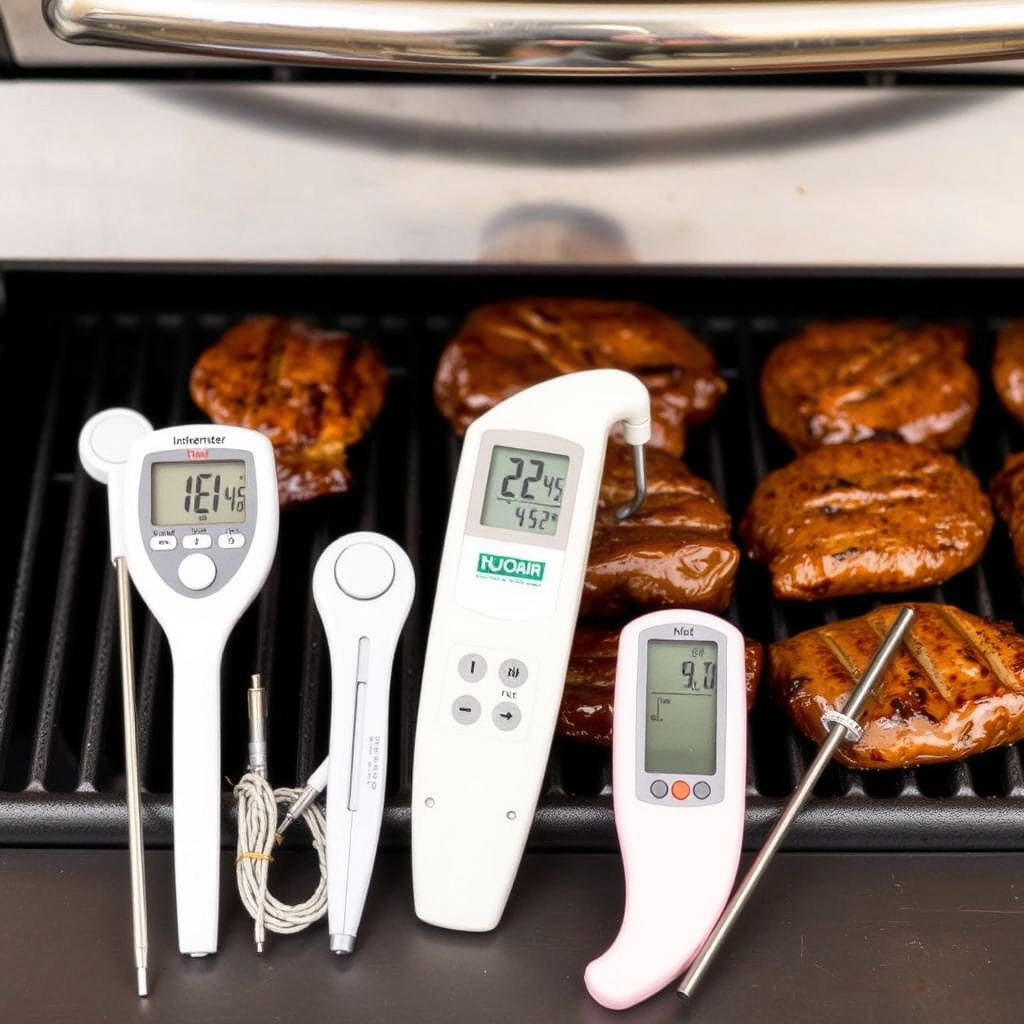
Instant-Read Thermometers
Instant-read thermometers provide quick temperature readings, usually within 3-10 seconds, making them a popular choice for grilling. They are handheld devices that you insert into the meat only when checking the temperature.
These thermometers come in digital and dial forms. Digital models often offer higher accuracy and faster response times, but dial versions require no batteries and can withstand higher grill temperatures.
- Fast: temperature in seconds
- Handheld and portable
- Requires opening grill to test temperature
Probe Thermometers with Grill Integration
Probe thermometers have a probe connected to a base unit that remains outside the grill, allowing continuous temperature monitoring during cooking. Some models include wireless or Bluetooth features for remote tracking via smartphone apps.
These devices are excellent for longer-cook meats like brisket or whole chickens, as they provide real-time temperature without opening the grill lid, maintaining stable heat and smoke inside.
- Continuous temperature monitoring
- Less lid opening preserves heat
- Some models offer wireless connectivity
Correct Placement of Meat Thermometer on the Grill
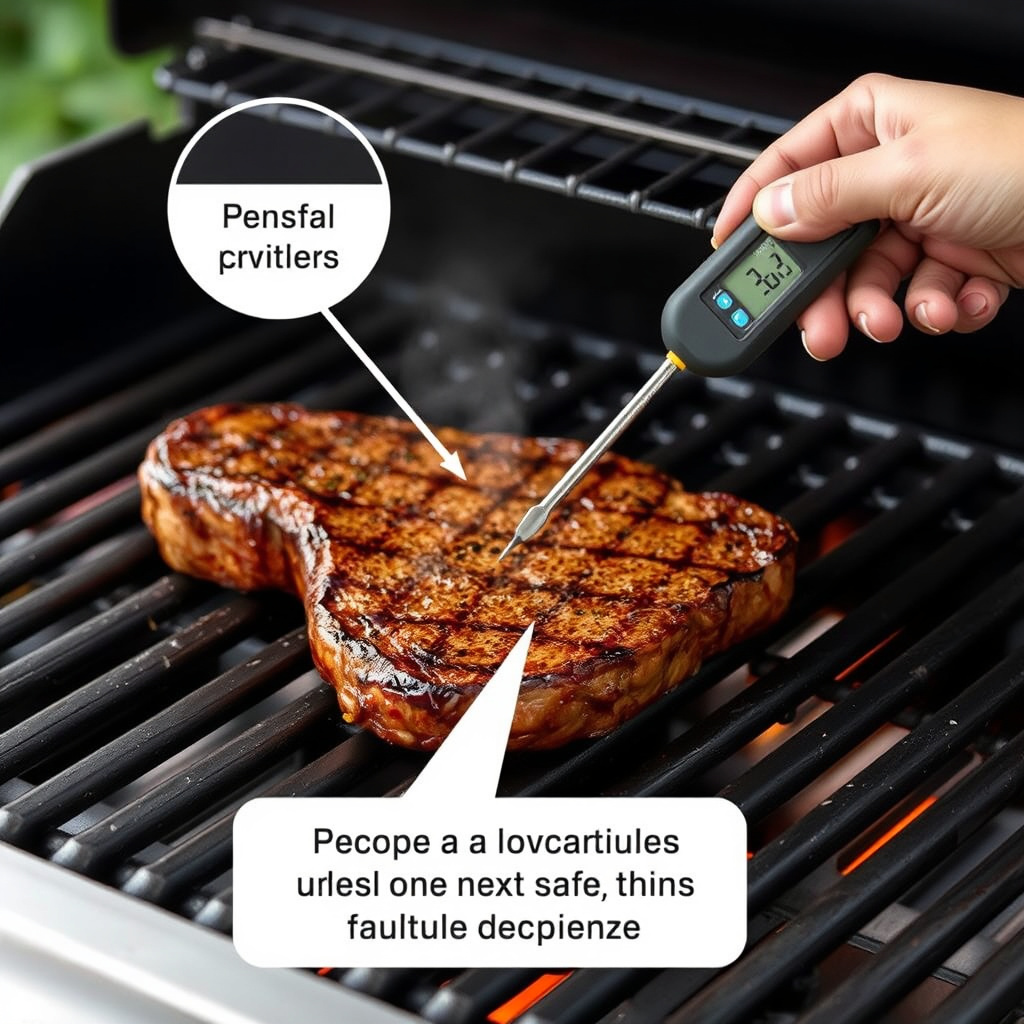
Inserting the Probe Correctly
Place the thermometer probe into the thickest section of the meat, away from bones, fat, or gristle, as these can give inaccurate readings. For thinner cuts, insert sideways to get an accurate core temperature.
For roasts or large cuts, check temperature in multiple spots to verify even cooking. Always insert probe at least halfway into the meat, ensuring the tip is fully embedded for a correct reading.
- Avoid bones and fatty areas
- Insert probe at thickest part
- Check multiple spots for large cuts
For more on this, see our related guide: How to Use a Grill Thermometer for Perfectly Cooked Meats Every Time.
Positioning on the Grill Itself
If using a probe thermometer with an external unit, position the grill probe cable so it doesn't touch hot grill grates or flames to prevent damage. Use the grill’s cooler zones for indirect cooking with the probe inserted into the meat.
Be mindful of opening the grill lid as little as possible to maintain consistent temperatures. Integrated probe thermometers help avoid frequent lid lifting by providing real-time data.
- Keep probe cable off hot surfaces
- Use indirect heat zones for larger cuts
- Minimize grill lid openings during cooking
Target Internal Temperatures for Common Grilled Meats
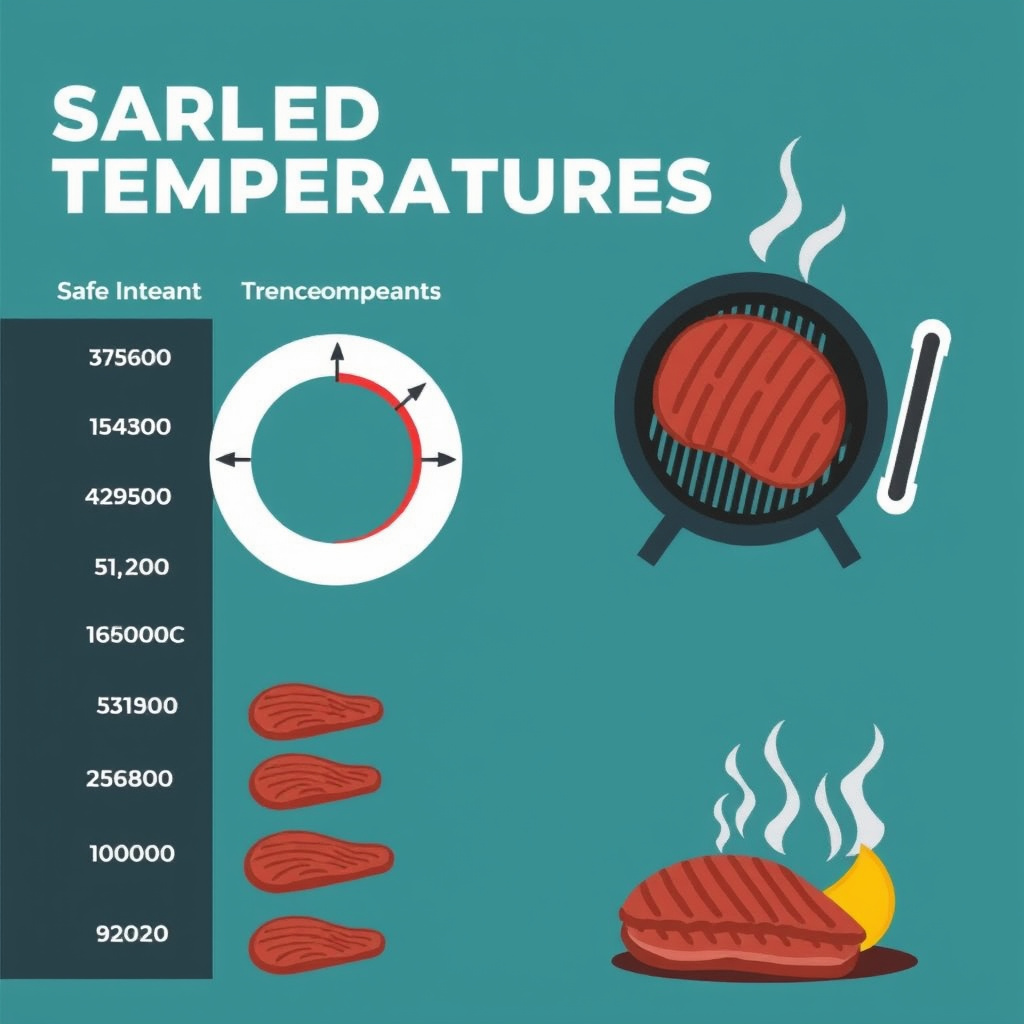
Safe Cooking Temperatures
To ensure food safety, poultry should reach an internal temperature of 165°F (74°C) to eliminate harmful bacteria. Ground meats like burgers need at least 160°F (71°C), while whole cuts of beef, pork, and lamb can be cooked to varying levels of doneness.
Using a meat thermometer takes the guesswork out of grilling, preventing foodborne illness caused by undercooked meats by hitting these safe internal temperatures every time.
- Poultry: 165°F (74°C)
- Ground beef/pork: 160°F (71°C)
- Beef/pork/lamb steaks & roasts: 145°F (63°C) minimum
Preferred Doneness Temperatures
For beef steaks and roasts, common doneness preferences include rare (125°F), medium-rare (135°F), medium (145°F), and well-done (160°F). Pork is best cooked to at least 145°F with a rest period to maintain juiciness.
Having a meat thermometer lets grillers customize cooking based on taste, avoiding overcooking while achieving the perfect texture and flavor profiles.
- Rare beef: 125°F
- Medium-rare beef: 135°F
- Medium beef/pork: 145°F
- Well-done beef: 160°F
Avoiding Common Mistakes When Using a Meat Thermometer on a Grill
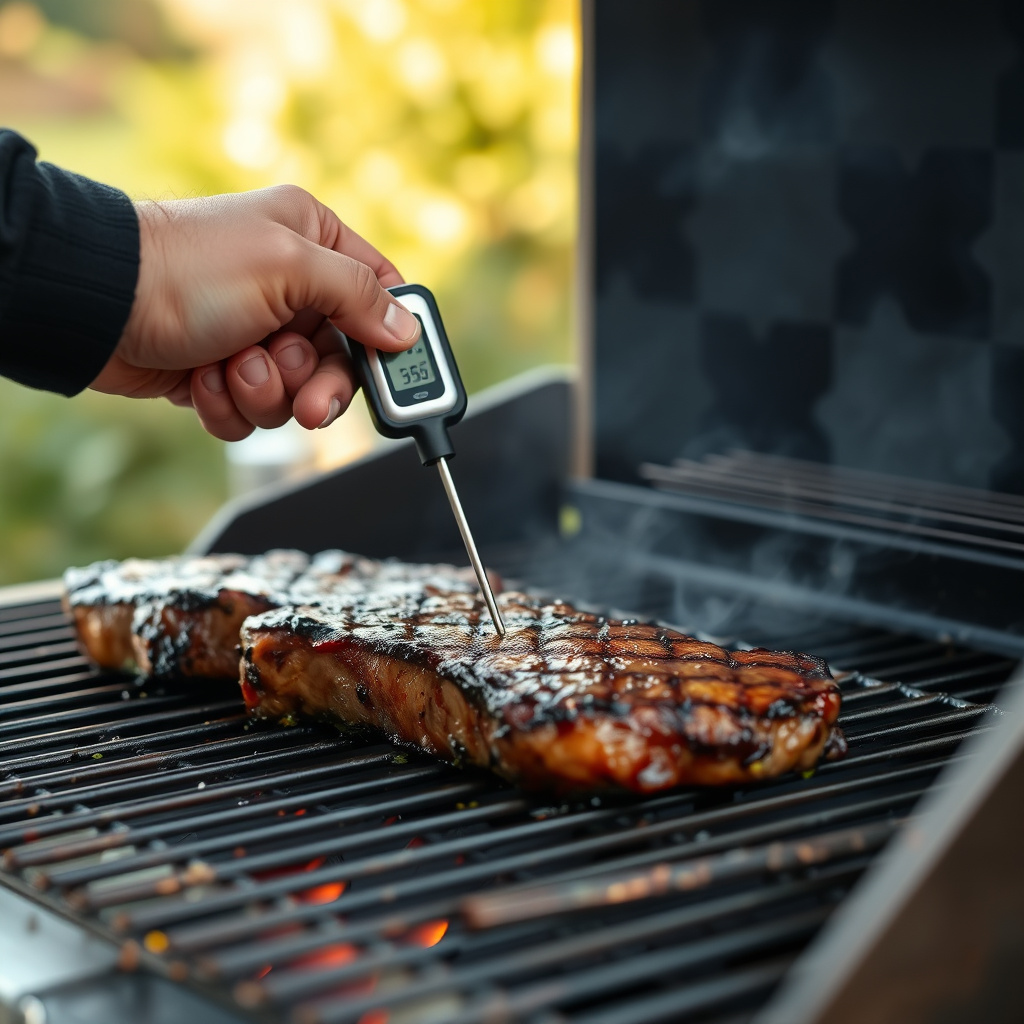
Incorrect Probe Placement
One frequent error is inserting the thermometer into fatty portions or near bones, which can cause temperature readings to be off by 10 degrees or more, misleading cooks about doneness.
Always confirm the probe's location before reading the temperature to avoid overcooking caused by false low readings or undercooking from false highs.
- Avoid touching bone or fat
- Insert fully into thick meat
- Double-check probe position
For more on this, see our related guide: How to Use a Smoker Grill: A Practical Guide for Perfect BBQ.
Opening the Grill Too Often
Opening the grill lid repeatedly to check temperature lets heat escape, extending cook times and elevating fuel consumption. Using a probe thermometer that provides continuous monitoring greatly reduces the need to lift the lid.
Maintain grill heat by trusting the thermometer readings and avoid guessing based on sight or smell alone for consistent cooking results.
- Use continuous-read thermometers
- Limit lid openings during cooking
- Trust thermometer over visual cues
Maintaining and Calibrating Your Meat Thermometer
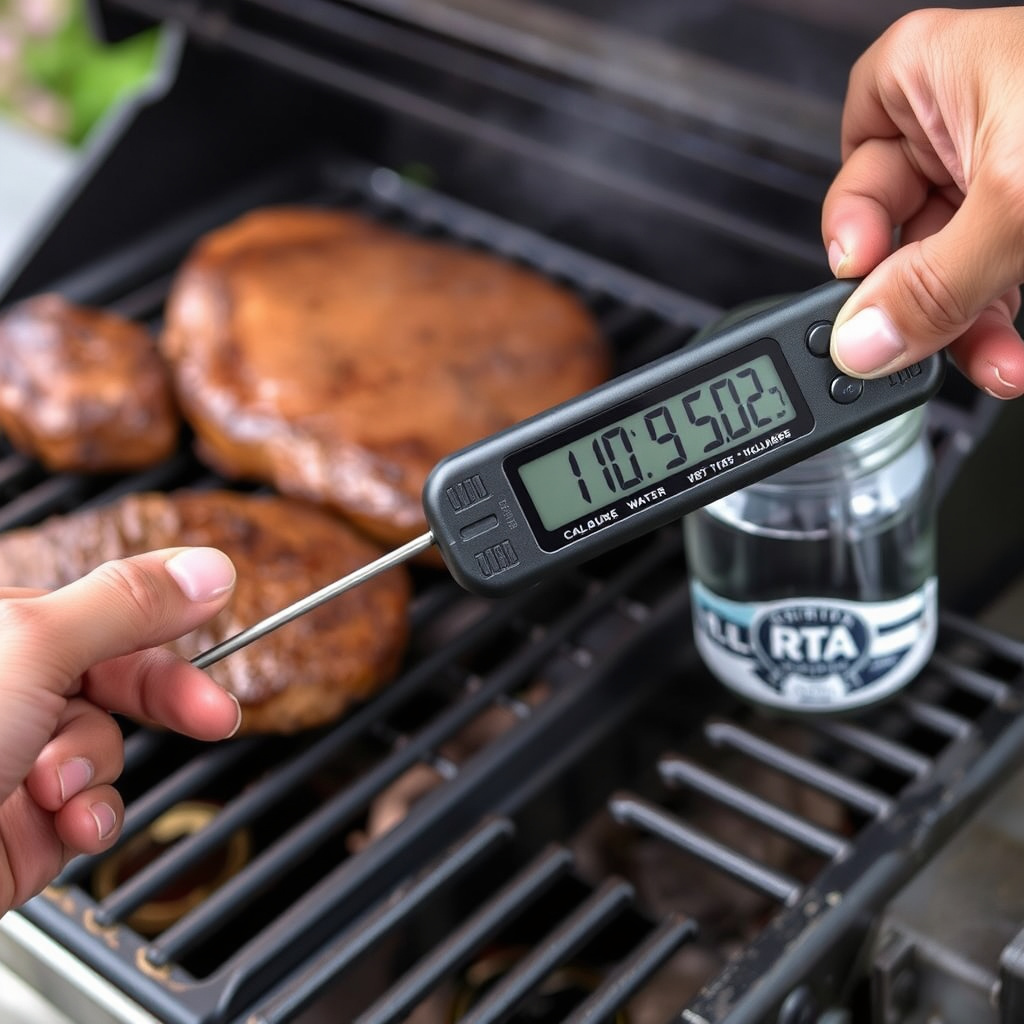
Cleaning After Each Use
Proper cleaning of the thermometer probe after each grilling session prevents cross-contamination and ensures accurate temperature readings. Use warm soapy water or sanitizing wipes and avoid immersing the device’s electronic components.
Cleaning immediately after use also prolongs the life of the thermometer, keeping sensors responsive and corrosion free.
- Wash probe with warm soapy water
- Avoid soaking electronic parts
- Dry thoroughly before storage
For more technical details about types and history, check out meat thermometer basics on Wikipedia. Meat thermometer basics on Wikipedia.
Calibrating for Accuracy
Periodically calibrate your meat thermometer to verify accuracy using an ice water test. Insert the probe into crushed ice and water; the reading should be very close to 32°F (0°C). Adjust or replace the thermometer if readings stray significantly.
Calibration keeps your thermometer reliable, especially important for grilling when precise temperatures matter for safety and taste.
- Use ice water test for calibration
- Adjust calibration if available
- Replace if readings are inconsistent
Meat Thermometer Types for Grilling Category Comparison
This comparison highlights key features of common meat thermometer types to help select the best one for your grilling needs.
| Thermometer Type | Speed of Reading | Ease of Use | Continuous Monitoring | Price Range |
|---|---|---|---|---|
| Instant-Read Digital | 3-5 seconds | High | No | $15 – $50 |
| Instant-Read Dial | 5-10 seconds | Moderate | No | $10 – $30 |
| Wired Probe Thermometer | Real-time | Moderate | Yes | $40 – $100 |
| Wireless/Bluetooth Probe | Real-time | High with App | Yes | $70 – $200 |
| Smart Oven Thermometer | Real-time | High | Yes | $100 – $250 |
Frequently Asked Questions
Can I leave the meat thermometer in the grill while cooking?
Only probe thermometers designed for grilling with heat-resistant cables can remain in the meat during cooking. Instant-read thermometers should be inserted only when checking temperature to avoid damage.
How do I know when the meat thermometer is working properly?
Check accuracy regularly by calibrating with an ice water test; the probe should read close to 32°F (0°C). Consistent readings during use also indicate proper function.
What is the best place to insert a meat thermometer in a steak?
Insert the probe horizontally into the thickest part of the steak, avoiding any bones or fat, to get the most accurate internal temperature reading.
Does opening the grill lid to check temperature affect cooking?
Yes, opening the lid frequently causes heat loss, increasing grilling time and fuel use. Using a probe thermometer with continuous monitoring reduces the need to open the lid.
Are meat thermometers accurate for thin cuts of meat?
Thin cuts can be tricky; inserting the probe sideways for better depth improves accuracy. Instant-read thermometers help by providing immediate feedback for quick-cooking items.
Key Takeaways
- Accurate meat thermometers prevent undercooking and overcooking on the grill.
- Probe placement is critical—always avoid bones and fat for correct readings.
- Continuous-read probe thermometers minimize heat loss by limiting lid openings.
- Regular cleaning and calibration keep thermometers reliable and safe.
Conclusion
Bringing precision to outdoor cooking hinges on how well you understand and use a meat thermometer on a grill. It eliminates guesswork, protects against foodborne illness, and elevates the flavor and texture of the meats you grill. Carefully inserting the probe where it best measures the thickest part of the meat ensures every cut reaches its ideal temperature safely and deliciously.
Selecting the right thermometer depends on your grill style and cooking habits. Instant-read thermometers serve those who prefer quick checks, while probe thermometers with continuous monitoring suit slow-cook barbecue aficionados. Knowing internal temperature targets for each type of meat lets you tailor your approach—from a rare steak to a thoroughly cooked poultry piece—making every meal a winning experience.
Next time you plan a grilling session, equip yourself with a reliable meat thermometer, follow the placement guidelines, and monitor temperatures regularly. This approach turns grilling from a guess into a precise art, enhancing consistency and your confidence over the fire. Don’t hesitate to perform routine maintenance and calibration on your device to keep results dependable for years to come.



